
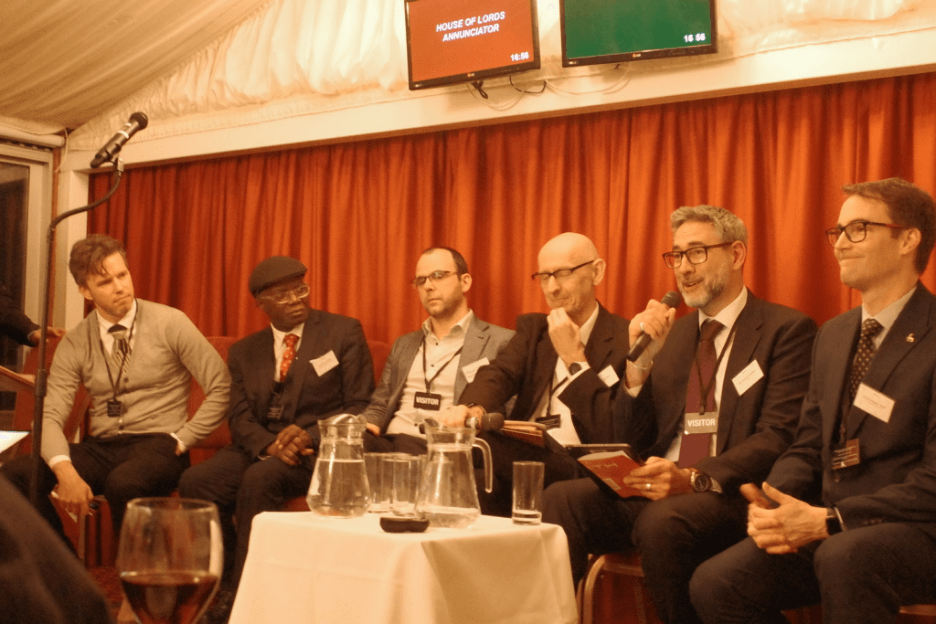
On December 15th at London's House of Lords, the AI Advancement Forum commenced with the University of Surrey Vice President (Global) Patrick Degg proclaiming, 'AI can, and inescapably will, change the educational landscape.' This set the stage for a day where global educational leaders explored the synergy between education and AI, culminating in the unveiling of KEATH.ai, a groundbreaking EdTech tool; where its CEO, Joey Lin, proclaimed, "Last December, students got ChatGPT; this December, teachers get KEATH.ai". Lin also likened generative AI's impact on education to the shift from horses to cars, with multiple universities piloting their technology and driving further data collection.
"This (2023) is the year of AI", added Surrey's President and Vice-Chancellor Professor Max Lu. "How are we going to push ourselves to measure assessment and learning at a higher level?" Alluding to KEATH.ai's launch, he asked the audience of global educational organisations. The forum featured panels of esteemed speakers from academia, and both the private and public sector, as well as prominent attendees representing multiple universities, from Oxford University to Columbia University; and embassy officials spanning several continents, from Africa, the Middle East, and Europe.
Wowing a captivated audience, KEATH CEO Joey Lin, formally introduced KEATH.ai as a groundbreaking AI tool in educational assessment evaluation software. After years of research and development, KEATH.ai's software guarantees consistent and precise student feedback, unilaterally saving teachers' time. Its proprietary technology ensures a high degree of accuracy of approximately 95%, which can be achieved when compared to human markers. Surrey's Associate Vice President and KEATH's Managing Director, Professor Yu Xiong, elaborated that KEATH's technology "will not replace humans, but act as a copilot, a digital assistant".
"Last December, students got ChatGPT; this December, teachers get KEATH.ai"
— Joey Lin, CEO of KEATH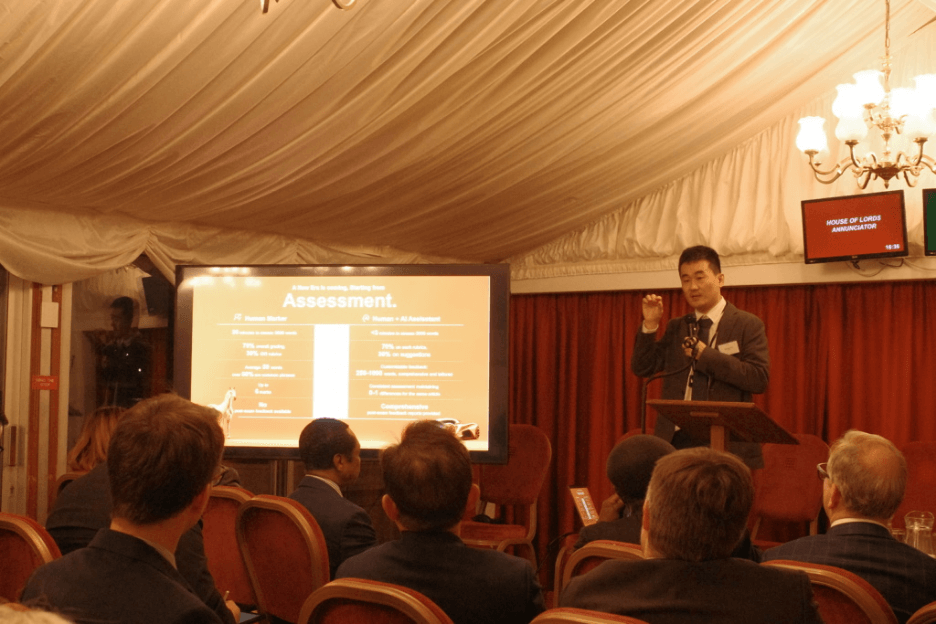
CEO of KEATH, Joey Lin
BBC's Executive Product Manager, Jon Howard, hypothesised what the future of education may look like "adaptive technologies, adapting the content to things that you like...with auto(matic)-grading is a big part of that". KEATH.ai's innovation received positive feedback from attending experts, including renowned UK education advisor, Dr. Trevor Lee, who remarked on its exceptional ease of use. "Teachers face immense personal pressure caused by marking overload, much of which amounts to many, many unpaid hours for work conducted in evenings and weekends. I estimate that 500 hours per year can realistically save many teachers' time, by the judicious use of KEATH.ai, without compromising any quality", said Lee.
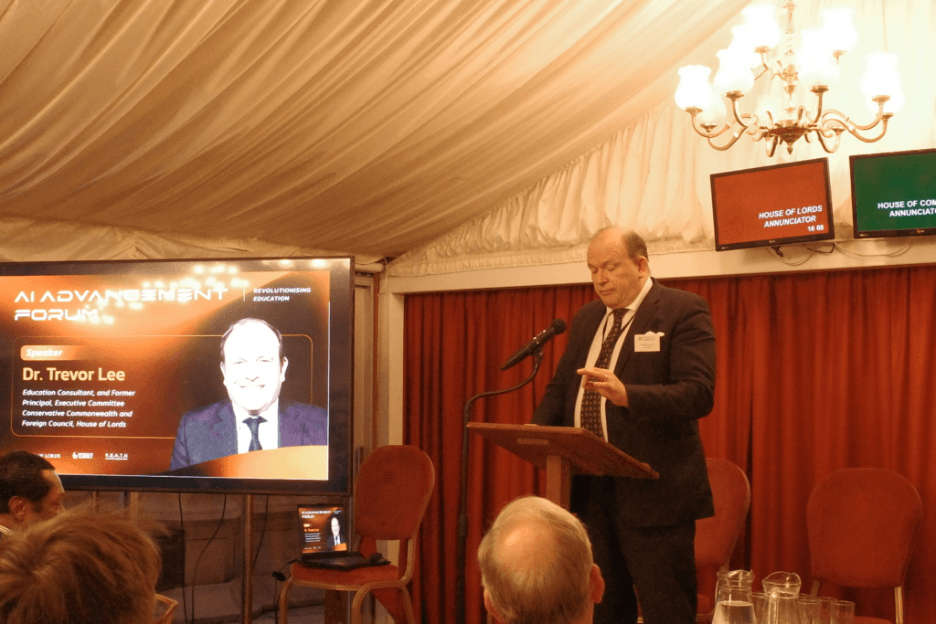
Pictured: Dr. Trevor Lee
The Lord Taylor of Warwick spoke positively about the new era of AI; and about bridging the gap between the " have nots" and "have yachts", and also mentioned Elon Musk's AI alarmism, cautiously preferring to adopt a 'glass half full' ideology. Lord Taylor emphasised the importance of ensuring that AI's power is democratised, saying, "This is imperative for the education sector, which has arguably been affected by social factors since its inception."
Baroness Manzila Uddin stated, "Leadership is really important and very salient when we define what AI is going to deliver us." She highlighted that AI will help address the importance of training and skilled professionals amongst all communities, which include a generation of talent in inner city areas hitherto not accessing this new area of opportunity within the field of the emerging technology economy.
De Montfort University's Vice-Chancellor, Katie Normington stated AI must be embraced to go forward, but change is inevitable in this sector and assessment must adapt in a reflective tandem. Michael Luck, Deputy Vice-Chancellor of the University of Sussex, discussed the fear and excitement surrounding AI, with recent advancements in deep learning allowing for significant progress. He also reinforced the need for responsible governance.
Professor Chris Imafidon said "AI opens a new era of feedback to learners and scholars. The speed of KEATH's marking essay-based exercise is incredible because 5,000 words are evaluated in minutes, with detailed individualised comments. It means that lecturers can set diagnostic, formulative and related work without the fear of spending endless weeks marking them manually".
UNESCO's Mark West remarked, "We (UNESCO) have been adamant that the only way that we are going to get the sort of educational transition in an AI world is by bringing different voices together. And that's what I have really witnessed today"."
As the AI Advancement Forum concluded, the spotlight was firmly on KEATH.ai, recognised for its potential to revolutionise the educational landscape.
Also a special thanks to speakers and panellists: Kevin Ebenezer, Chris Trace, Steve Connolly, Will Lovegrove, Lisa Nelson, Lisa Collins, and Professor Chris Imafidon